
The First Stewards of This Land (Part 1)
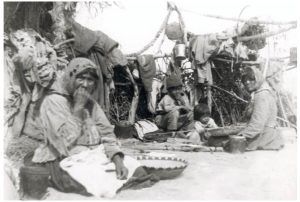
The Maara’yam (Serrano), Kawiya (Cahuilla), and Nüwü (Chemehuevi) peoples were the first inhabitants of the Morongo Basin, first arriving around the 1500s. The Aha Macav (Mohave) people also traveled throughout the area but never settled. Though mostly nomadic, the Serrano settled in present-day Morongo Valley; this area was also frequented by the Cahuilla. The Serrano and later Chemehuevi used the Oasis of Mara (Maara’) in present-day Twentynine Palms as a seasonal settlement. The Serrano called the oasis “Mara,” loosely translated as “the place of little springs and much grass.”
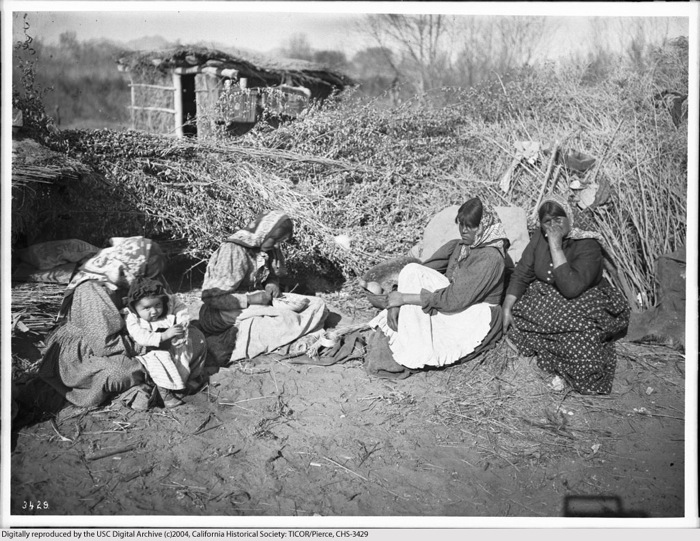
By the early 1800s, present-day Morongo Valley was inhabited by a powerful Serrano clan called Maarrênga 'yam Hiddith. In their native language, Maarrênga means “land of many waters.” Non-Indians pronounced Maarrênga (also Maringa) as Morongo. In the late 1800s, the hereditary leader of the clan was known by his English name, John Morongo (he was also known as Captain Morongo; born around 1844).
John Morongo’s clan was established around 1840 when his father, Sia Morongo (who belonged to the Maringa [Mariña] Serrano Tribe; he too was known as Captain John Morongo) and his mother, Rosa (who belonged to the Pass Cahuilla Tribe) were married. They were known as the Sia Morongo Clan. The clan became so significant to the area, that their name was used to name Little Morongo Valley (what the clan called present-day Morongo Valley), Big Morongo Valley (what the clan called present-day Yucca Valley), the Morongo Canyons (Big Morongo/Little Morongo), the Morongo Basin, the Morongo Unified School District, and the Morongo Indian Reservation.
The indigenous people of the Morongo Basin were hunter/gatherers and often traded goods with distant villages. In time, a trail was cut from Banning, CA to the Arizona border at the Colorado River. In the 1850s, while following the trail westward from the Colorado River, Paulino Weaver established a road that passed by the Oasis of Mara, traveling to present-day Morongo Valley. Weaver was an Army Scout, trapper, cattleman, and gold-seeker. The road would become known as Weaver Road. It was later known as Dale Road, then Twentynine Palms Road, which became the Twentynine Palms Highway and was designated SR62 in 1964.
In 1862, a smallpox epidemic broke out in the Pacific Northwest, devastating large portions of indigenous peoples. The epidemic quickly traveled south, reaching the present-day Morongo Basin later that year. Many of the Serrano people fell to this disease, including the clans in present-day Morongo Valley and present-day Twentynine Palms. Two indigenous burial grounds have been located in Morongo Valley, and those buried there are (opens in new t believed to have died from smallpox.
In 1865, the Morongo Indian Reservation was established located near Banning, CA. It is one of nine small reservations
permanently created by President Ulysses S. Grant by executive order on May 15, 1876. Many of the Serrano people relocated to this reservation, including the clan from present-day Morongo Valley. Today, they are known as the Morongo Band of Mission Indians. The Serrano people from Twentynine Palms relocated to a reservation in Highland, CA, known today as the San Manuel Band of Mission Indians. The Chemehuevi people eventually relocated to a reservation in Coachella, CA known as the Twenty-Nine Palms Band of Mission Indians.
Written by: Thomas Crochetiere
About the Author
Thomas Crochetiere works with the National Park Service at Joshua Tree National Park as a Docent. After retiring from a career in public service, he began working with the NPS in 2013. From the more than 302,000 eligible volunteers, Thomas was recognized for his contributions to the park service during the NPS National Volunteer Week in April 2019 and featured in an article titled “NPS Meet Our Volunteers: Tom Crochetiere.” In February 2024, after volunteering more than 5,000 hours at JTNP, he was honored by being presented with the President’s “Lifetime Achievement Award.”
Thomas is a member of the Morongo Basin Historical Museum and the Twentynine Palms Historical Society. He also volunteers with the Desert Regional Tourism Agency at the California Welcome Center in Yucca Valley as a Welcome Ambassador and is a member of the Hi-Desert 4x4 Group of Yucca Valley.
As a local historian, Thomas spends countless hours researching area history. While identifying and promoting historical records, he enjoys putting together pieces of the puzzle to offer a unique perspective on events that helped to shape the communities and places around us. He has published several books, including; “A History of the Morongo Basin” (formerly “Gateway to the Morongo Basin”), “The History of Joshua Tree National Park,” “Keys Desert Queen Ranch: A Visual and Historical Tour,” “The Trail Guide to Joshua Tree National Park,” “William F. Keys of Joshua Tree National Park,” and “Samuelson’s Rocks; The Legend Chiseled in Stone.”
Thomas is an avid traveler, having visited all 50 states, and is in the process of doing it all again. A devoted park visitor, he is passionate not only about Joshua Tree National Park but about all our National Park units and enjoys sharing them with others.
Local history matters because a city is not a community without an understanding of its past.
